- Unhashed Newsletter
- Posts
- Binance challenges Bitcoin’s oil narrative
Binance challenges Bitcoin’s oil narrative

Reading time: 5 minutes
Binance challenges oil narrative as Bitcoin nears $72K

Key points:
According to Binance Research, institutional capital flows, rather than oil shocks, are increasingly shaping Bitcoin’s market direction even as geopolitical headlines trigger short-term volatility.
Bitcoin rebounded toward the $72K resistance zone on ceasefire optimism and sustained ETF inflows, signaling continued structural demand beneath recent price swings.
News - Bitcoin climbed back toward the $71K to $72K range midweek after retesting its 50-day trend support, as risk sentiment improved following reports that the United States had sent Iran a ceasefire proposal aimed at easing regional tensions. The shift helped lift broader markets. Gold moved higher, crude prices retreated, and equities stabilized as concerns about shipping disruptions through the Strait of Hormuz began to soften.
At the same time, fresh analysis from Binance Research framed the rebound within a wider structural context. The firm said geopolitical oil shocks have historically amplified Bitcoin’s short-term volatility but have not dictated its longer-term direction. Instead, institutional demand channels such as spot ETF inflows, corporate treasury accumulation, and U.S. market buying have continued to absorb macro stress during periods of uncertainty.
Traders nevertheless viewed the $72K region as a decisive supply zone, with concentrated sell liquidity and recent profit-taking suggesting that sustained demand is required to unlock further upside. Analysts also warned that price action could remain sensitive to geopolitical headlines until clearer signs of de-escalation emerge.
Institutional flows underpin market resilience - Spot Bitcoin ETFs have attracted nearly $2.5 billion in inflows over the past month, offsetting much of the earlier year-to-date outflows despite a deep drawdown from prior highs. Market observers said this persistence highlights growing institutional conviction and reinforces Bitcoin’s role as a forward-looking liquidity asset rather than one driven by commodity market swings.
Bhutan slashes Bitcoin treasury after $37M move

Key points:
Bhutan transferred about 519.7 BTC worth roughly $37M, extending a March drawdown that has reduced its sovereign holdings to around 4,453 BTC.
Continued wallet outflows point to structured treasury management even as the country maintains long-term mining expansion and crypto reserve plans.
News - Bhutan moved another tranche of Bitcoin from a government-linked wallet on Wednesday, sending 519.7 BTC to two addresses, including one associated with Singapore-based trading firm QCP Capital. The transfer, valued at roughly $36M to $37M, marked the third major sovereign outflow this month and added to ongoing market attention around the kingdom’s evolving Bitcoin position.
On-chain data shows Bhutan now holds about 4,453 BTC worth slightly above $315M at recent prices. The stash has fallen sharply from a peak of more than 13,000 BTC in late 2024, reflecting a steady pattern of low-profile sales. Recent movements included a roughly $72M transfer in mid-March and another near $12M earlier in the month, signaling heavier drawdowns compared with February activity.
Mining economics reshape treasury decisions - Bhutan built much of its Bitcoin position through state-backed mining powered by domestic hydropower resources. However, analysts tracking wallet flows point to reduced inflows since the 2024 halving cut block rewards and tightened mining margins. Some observers have also raised the possibility that operational costs and competing energy demands are influencing output levels.
Long-term crypto ambitions remain unchanged - Despite trimming holdings, Bhutan continues to expand its broader digital asset strategy. The country has advanced mining capacity through a $500M partnership with Bitdeer and plans to deploy part of its Bitcoin reserves toward projects such as the Gelephu Mindfulness City.
Officials have also outlined plans for a strategic crypto reserve that could include Bitcoin, Ether, and BNB, underscoring a dual approach of periodic sales alongside continued ecosystem investment.
XRP faces breakdown risk as Ripple eyes enterprise growth

Key points:
XRP is hovering near a critical support band as ETF outflows, rising exchange reserves, and tightening price structure point to growing downside risk.
Ripple is simultaneously advancing institutional adoption by testing RLUSD-based trade settlement in Singapore’s central bank sandbox.
News - XRP traded near the $1.40 region this week as market signals turned increasingly mixed. The token remained locked in a narrowing range, with buyers defending support around $1.38 while repeated rejection near $1.42 kept upward momentum limited. Traders said the longer price compresses within this band, the greater the likelihood of a decisive breakout or breakdown.
Bearish pressure has gradually intensified. XRP spot exchange-traded funds (ETFs) recorded roughly $30M in net outflows in March, marking the first negative monthly flow since launch. At the same time, on-chain metrics showed the exchange supply ratio on Binance climbing to a year-to-date high, suggesting more tokens are being positioned for potential selling activity.
Short-term chart structure has added to caution. A head-and-shoulders formation on lower timeframe charts points to the possibility of a deeper correction if key support levels fail, with analysts warning that sustained weakness below recent range lows could accelerate downside momentum.
Ripple advances programmable settlement strategy - While price dynamics remain fragile, Ripple has stepped up efforts to build institutional utility. The company joined the Monetary Authority of Singapore’s BLOOM sandbox alongside supply chain finance firm Unloq to test programmable cross-border trade settlement using the XRP Ledger and its RLUSD stablecoin.
The pilot is designed to release payments automatically when shipment conditions are verified, aiming to reduce reliance on manual verification and correspondent banking delays. Participation in the initiative follows recent regulatory and product expansion steps, reinforcing Ripple’s push to position RLUSD and XRPL infrastructure as compliant settlement rails for enterprise use cases.
Key points:
Irish investigators accessed a long-seized Bitcoin wallet holding about 500 BTC, marking the first breakthrough in a major crypto confiscation case.
The wider stash of roughly 6,000 BTC has surged in value since seizure, raising the stakes for potential recovery of the remaining wallets.
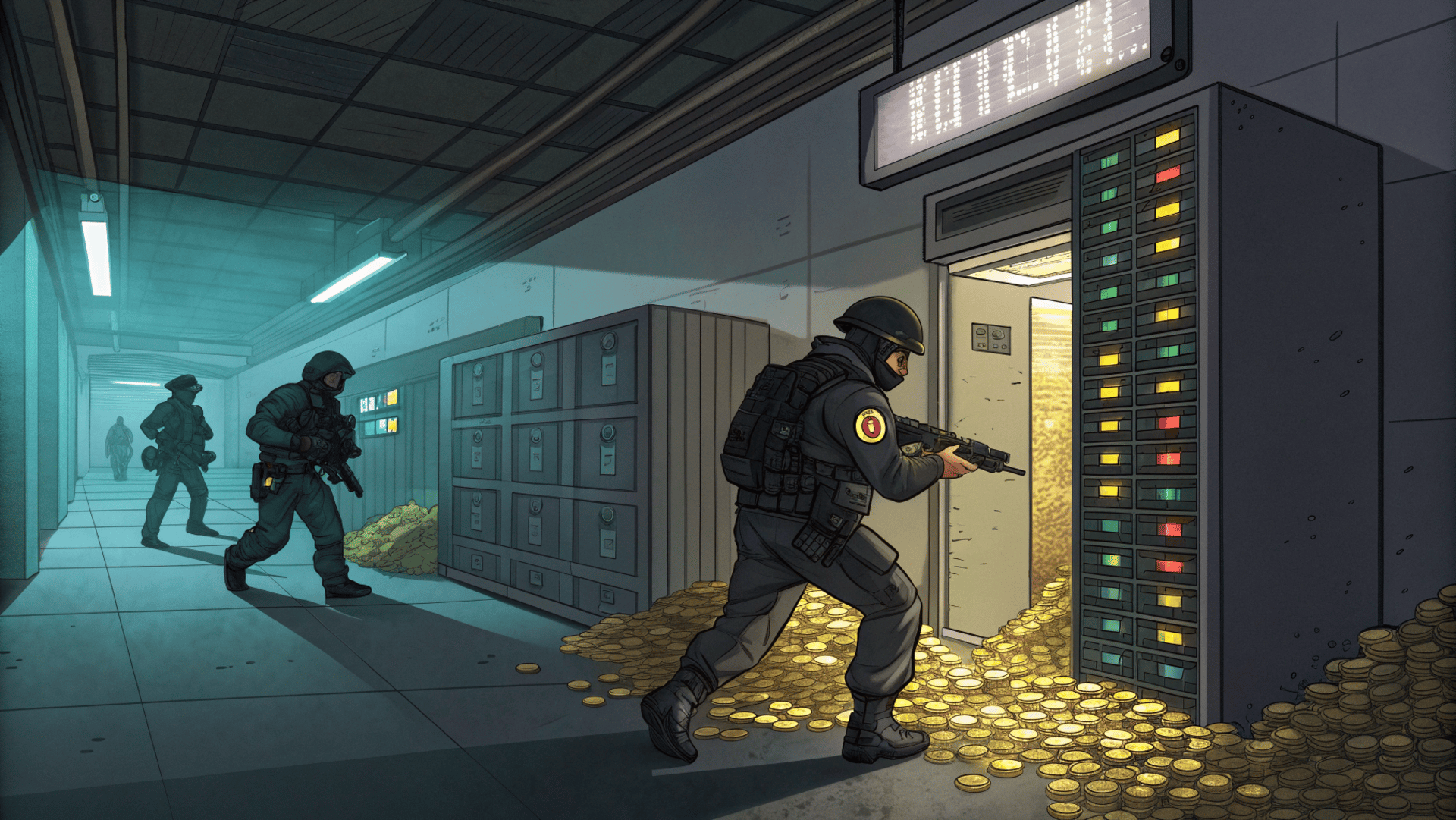
News - Authorities in Ireland have finally gained access to a Bitcoin wallet that had been considered permanently locked for years. The Criminal Assets Bureau, working with Europol’s cybercrime unit, successfully unlocked a wallet containing about 500 BTC worth roughly $34M to $35M, in what officials described as a technically complex operation.
The funds were part of a much larger cache linked to convicted cannabis grower Clifton Collins, who had purchased thousands of Bitcoin in the early 2010s using proceeds from drug sales. Collins divided roughly 6,000 BTC across 12 separate wallets and stored the private keys on a printed sheet hidden inside a fishing rod case. After his arrest, the document was reportedly lost during a property clear-out, leaving authorities unable to access the seized assets.
Blockchain data later showed the recovered coins being moved to Coinbase Prime, marking the first confirmed recovery from a trove that has appreciated sharply over time. When the assets were originally confiscated, the full stash was valued at about €53M. It is now estimated to be worth around €360M.
Focus shifts to remaining wallets - Investigators believe the same technical approach could potentially unlock the remaining wallets. If further access is achieved, the case could become one of the largest cryptocurrency recoveries by law enforcement, underscoring both the risks of lost private keys and the increasing sophistication of digital asset investigations.
Go from AI overwhelmed to AI savvy professional

AI will eliminate 300 million jobs in the next 5 years.
Yours doesn't have to be one of them.
Here's how to future-proof your career:
Join the Superhuman AI newsletter - read by 1M+ professionals
Learn AI skills in 3 mins a day
Become the AI expert on your team
More stories from the crypto ecosystem
Did you know?
A central bank is already putting reserve money into crypto: On March 6, 2026, Kazakhstan’s central bank said it had formed a portfolio of up to $350 million from its gold and foreign exchange reserves for investment in crypto-related assets, showing how state-level exposure to digital assets is no longer just a private sector story.
Europe moved ahead of most major economies with unified crypto laws: The EU’s Markets in Crypto-Assets (MiCA) regulation became fully effective for stablecoin issuers in 2024, establishing common rules across member states and giving banks and fintech firms clearer legal footing to enter the sector.
A Bitcoin ETF rewrote growth records in traditional finance: BlackRock’s iShares Bitcoin Trust became the fastest ETF in history to reach major asset milestones, crossing $10 billion in assets just weeks after its January 2024 launch and signaling unprecedented institutional demand for crypto exposure.
Daily news for curious minds.
Be the smartest person in the room. 1440 navigates 100+ sources to deliver a comprehensive, unbiased news roundup — politics, business, culture, and more — in a quick, 5-minute read. Completely free, completely factual.
Top 3 coins of the day
Siren (SIREN)
Key points:
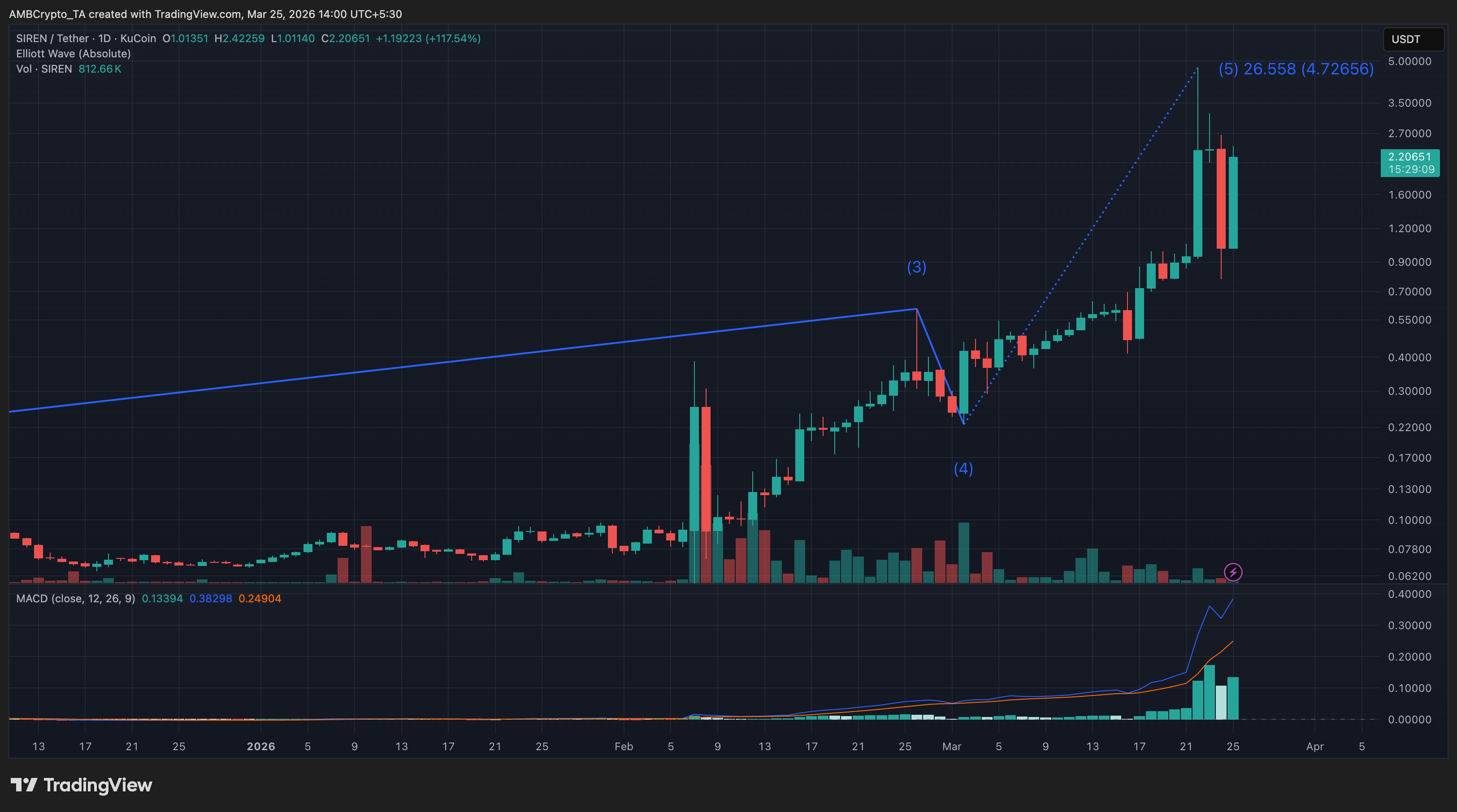
SIREN rallied sharply to around $2.20 after surging more than 100% in the latest session, with price action completing an impulsive Elliott Wave leg and pushing into a volatile upper range.
The MACD lines widened in bullish territory while recent volume spikes confirmed strong participation during the breakout phase.
What you should know:
SIREN accelerated into a steep uptrend after forming higher lows through March, eventually completing a strong fifth-wave advance that briefly sent the token toward the $2.40 area before a pullback. Price later stabilized near the $2.00 region, which now acts as an immediate support level to watch. Sustained closes above $2.40 could keep upside momentum intact, while a drop below $2.00 may expose the token to sharper retracements toward the $1.60 zone.
The rally coincided with the launch of perpetual futures trading and growing speculative interest around its AI-themed narrative. Reports of highly concentrated token supply also amplified volatility, allowing relatively modest capital flows to trigger large price swings during peak trading sessions.
Stellar (XLM)
Key points:
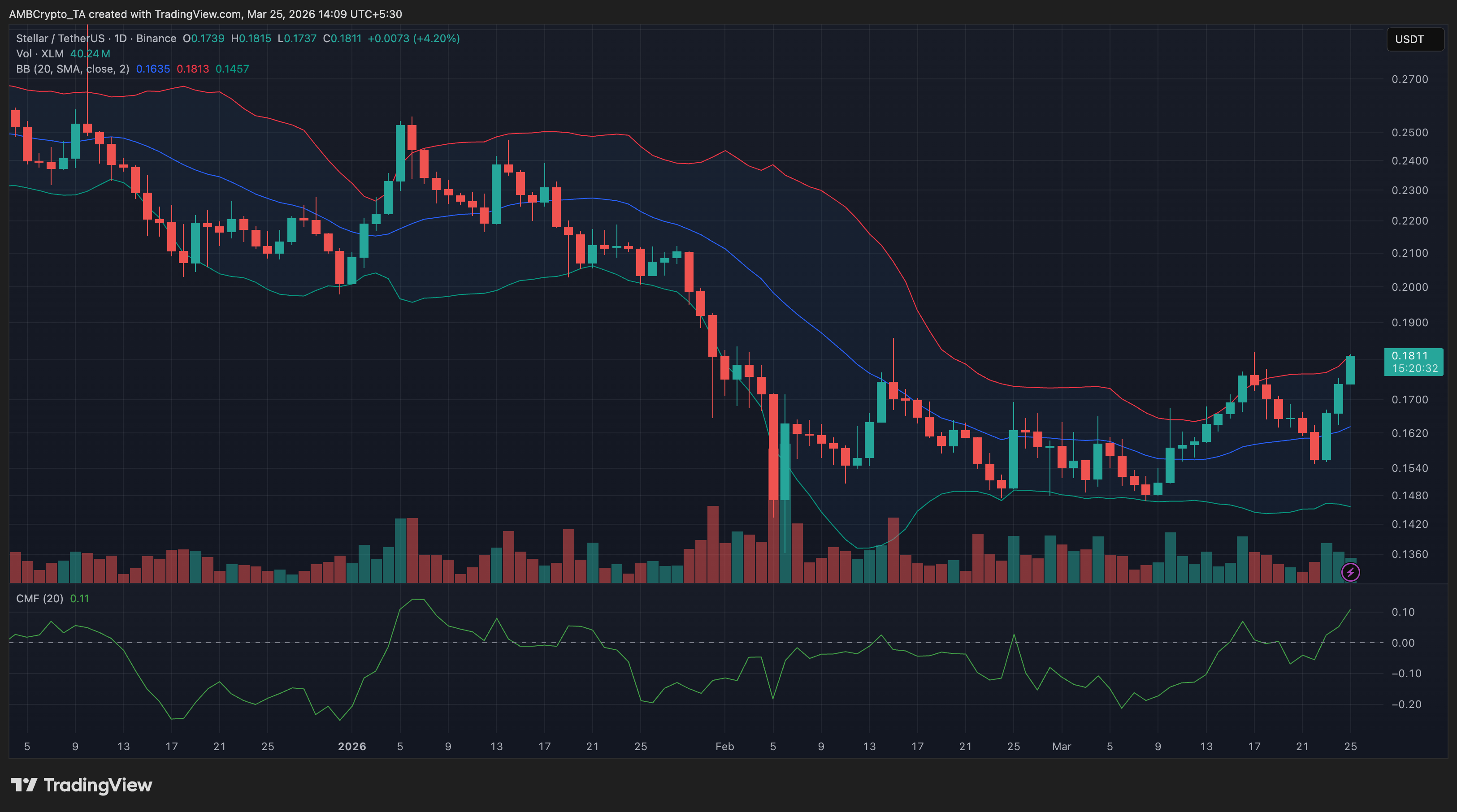
XLM advanced toward $0.18 after breaking out of a narrow consolidation range, with price pushing into the upper Bollinger Band as short-term momentum strengthened.
The CMF moved back above the zero line while rising volume during recent green candles signaled renewed buying pressure.
What you should know:
XLM gained traction after stabilizing near $0.15 earlier in March, gradually forming higher lows before testing resistance in the $0.18 to $0.19 region. The move coincided with Bollinger Bands widening after a period of compression, indicating a fresh volatility expansion. Sustained strength above $0.19 could support a continuation toward the $0.21 zone, while failure to hold momentum may bring the $0.16 support area back into focus.
Sentiment improved alongside institutional developments, including Amundi launching a $100 million tokenized fund on the network and Stellar joining Mastercard’s crypto partner program. Additional confidence followed regulatory clarity from U.S. agencies classifying XLM as a digital commodity.
Polkadot (DOT)
Key points:
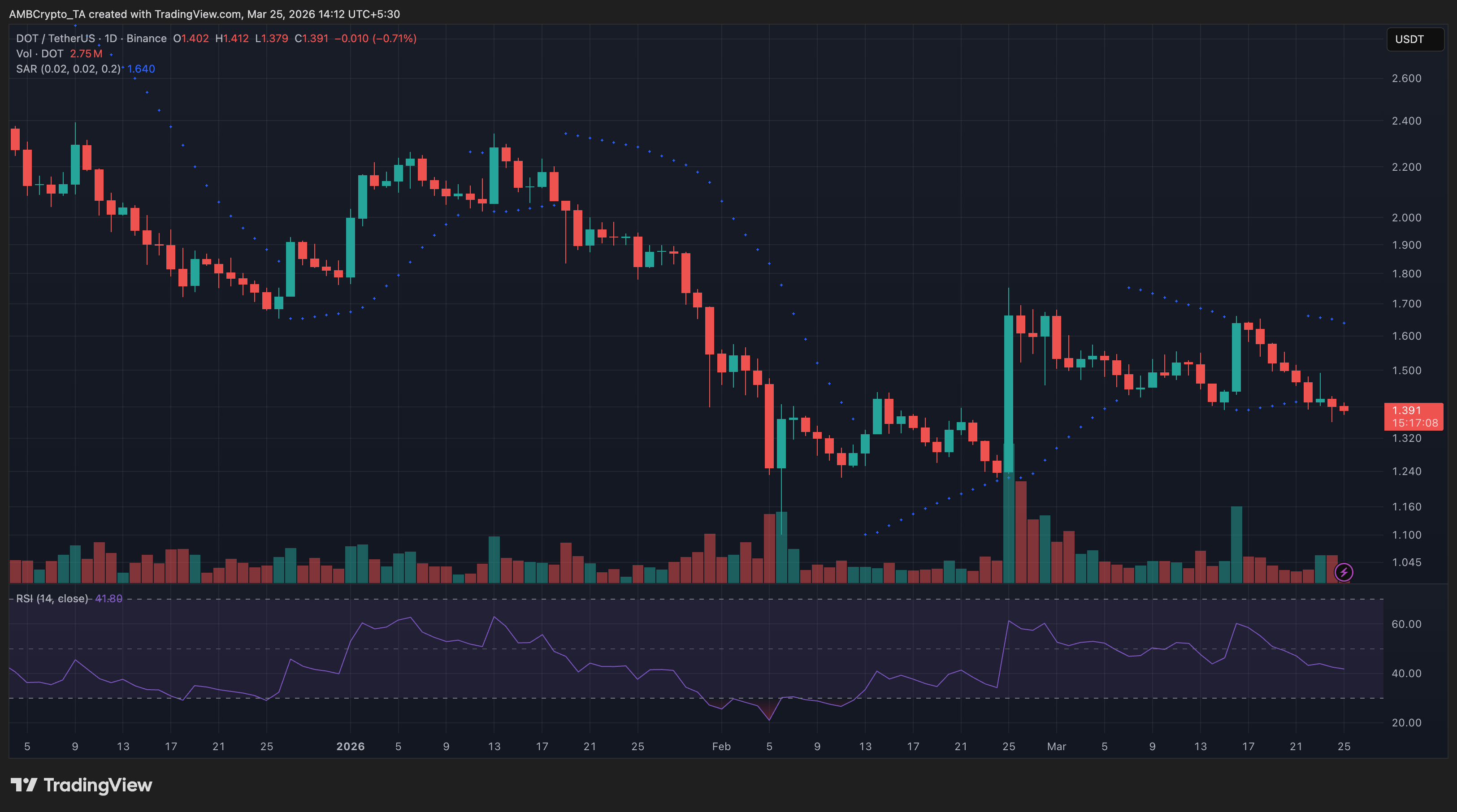
DOT slipped toward $1.39 after failing to sustain its late-February breakout, while Parabolic SAR stayed above price and signaled persistent selling pressure.
RSI eased to the low-40 zone and declining volume after the rally highlighted weakening momentum.
What you should know:
Polkadot retreated after its March rebound lost traction near the $1.70 region, gradually forming lower highs as buyers stepped back. Momentum cooled as participation thinned following the earlier surge, allowing sellers to regain short-term control. The $1.34 zone now acts as an important support level, while a recovery attempt would require a push toward the $1.55 to $1.60 resistance range.
Sentiment remained fragile amid broader market caution tied to geopolitical tensions and regulatory uncertainty in the U.S. crypto sector. The post-halving rally also appeared to fade as leveraged traders exited positions and institutional inflows after the recent ETF debut failed to accelerate.
How was today's newsletter? |