- Unhashed Newsletter
- Posts
- Bitcoin’s war rally faces reality check
Bitcoin’s war rally faces reality check

Reading time: 5 minutes
Pakistan reopens crypto banking after 8-year freeze

Key points:
Pakistan has allowed banks to service licensed crypto firms under a new legal framework, ending a years-long restriction.
Banks remain barred from trading or holding crypto, with strict AML, KYC, and fund segregation rules in place.
News - Pakistan has formally reopened its banking system to the crypto sector, reversing a restriction first introduced in 2018. Under new rules issued by the State Bank of Pakistan (SBP), banks and regulated entities can now provide services to virtual asset service providers (VASPs) licensed by the Pakistan Virtual Asset Regulatory Authority (PVARA).
The shift follows the Virtual Assets Act 2026, which establishes a structured framework for licensing, regulation, and oversight of digital asset activity. While banks may open accounts for approved firms, their role is limited to facilitation, with no ability to trade, invest in, or hold crypto assets.
Guardrails define the new framework - The updated rules introduce strict compliance requirements, including enhanced due diligence, ongoing transaction monitoring, and adherence to anti-money laundering and counter-terror financing standards.
Banks must maintain separate, rupee-denominated Client Money Accounts, ensuring customer funds remain segregated and cannot be used for lending, collateral, or operational purposes.
A shift driven by real-world adoption - The policy change reflects a market that continued to grow despite restrictions. Millions of users relied on peer-to-peer platforms and offshore exchanges, pushing activity outside the formal system.
In 2025 alone, Pakistan processed about $25 billion in crypto transactions, highlighting the scale of adoption. The new framework now brings that activity into a regulated environment while supporting future plans around tokenized assets, mining, and potential stablecoin development.
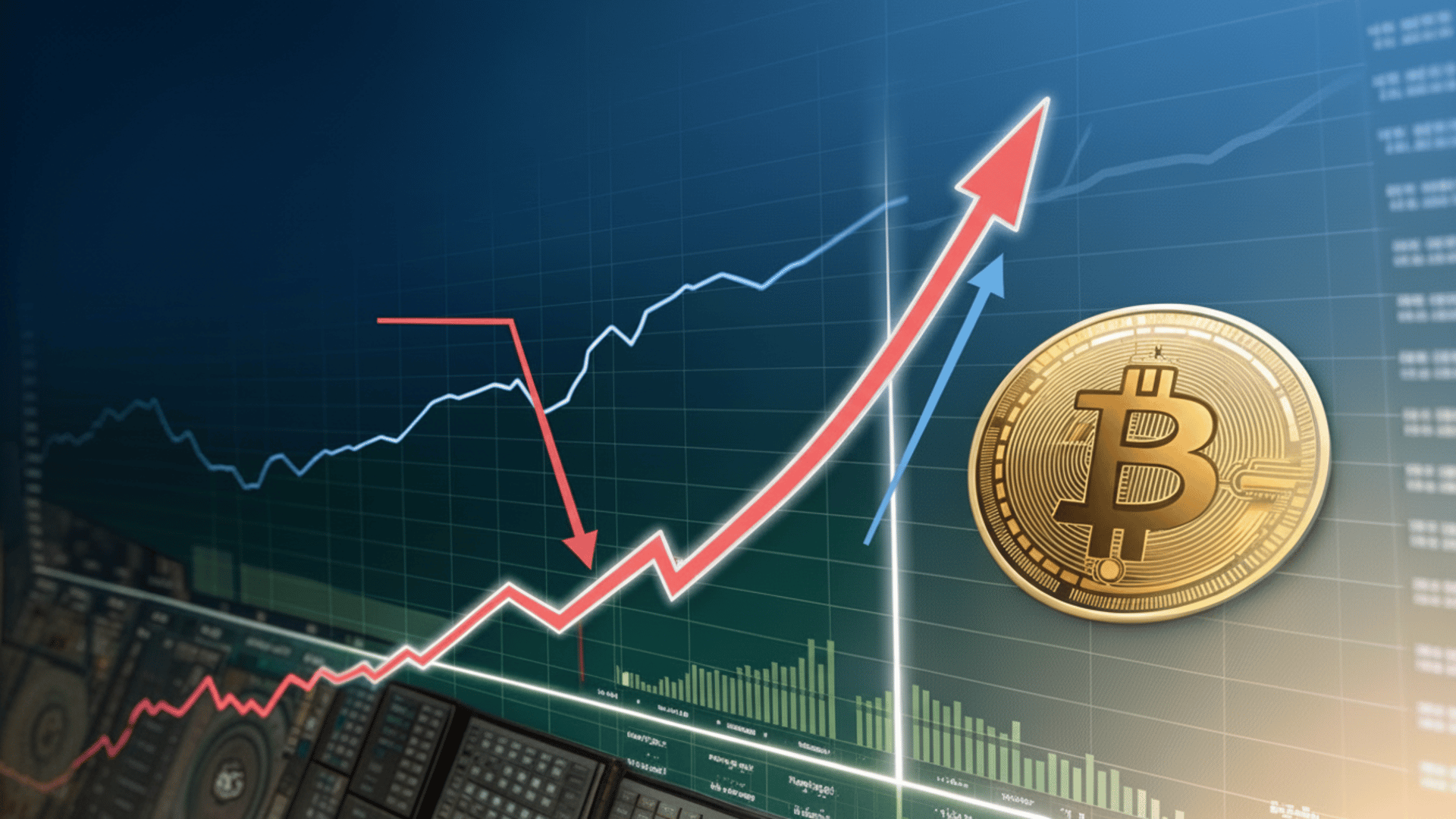
Bitcoin’s war rally faces reality check as markets split
Key points:
Bitcoin outperformed gold and equities during the Iran conflict, reviving its “currency” narrative alongside store-of-value demand.
Despite ETF inflows and institutional support, analysts warn the market remains fragile with downside risks still in play.
News - Bitcoin’s recent rally reflects competing forces as geopolitical tension, institutional flows, and market structure shape its trajectory.
Since late February, Bitcoin has gained over 10%, outperforming both gold and the S&P 500 during the Iran conflict. Bitwise CIO Matt Hougan highlighted a shift in how the asset is being priced, pointing to its growing role beyond digital gold. Iran’s reported plan to accept Bitcoin payments for shipping transit has reinforced its role as an alternative financial rail during geopolitical friction.
Institutional demand has added to the momentum. Spot Bitcoin ETFs drew $411 million in inflows as BTC briefly crossed $75,000, supported by improving liquidity and a modest recovery in risk appetite.
Wall Street’s influence could reshape volatility - Firms like Goldman Sachs and BlackRock are exploring options-based ETFs designed to generate yield while reducing volatility. Large-scale options activity and hedging could further dampen Bitcoin’s price swings, extending an ongoing decline in volatility.
While this may attract institutional participation, it could also limit the sharp upside moves traders typically expect.
Rally strength remains uncertain - Despite recent gains, Bitcoin continues to face resistance near $76,000, where selling pressure has emerged.
Some analysts argue the market has not yet reached a bottom, warning that a deeper correction may still unfold. While institutional ownership may reduce extreme drawdowns, the broader trend remains unclear, leaving traders cautious as the next phase develops.
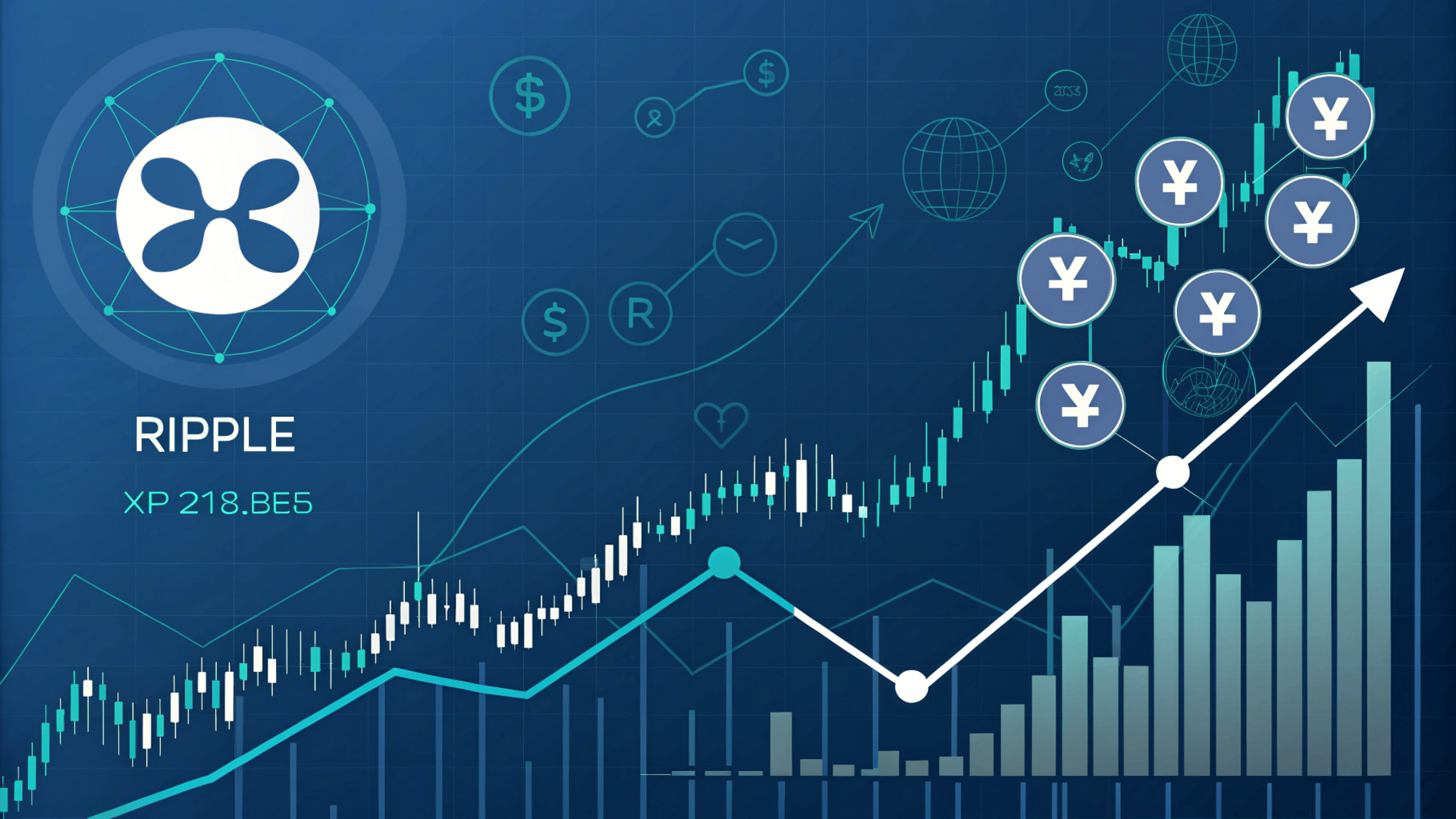
XRP stuck at $1.36 as adoption expands, breakout looms
Key points:
XRP has been consolidating near $1.36 with declining volume and subdued whale activity, signaling a potential volatility move ahead.
At the same time, rising adoption across payments, tokenization, and institutional DeFi is strengthening XRP’s broader use case.
News - XRP has been holding at a critical level as muted price action contrasts with expanding adoption and institutional developments across its ecosystem.
XRP was trading near $1.36, stuck in a tight range after repeated rejections near resistance. Trading activity has slowed, with both volume and whale transactions falling to multi-month lows, pointing to a compression phase that often precedes a larger move.
However, the fundamental backdrop is shifting. Japan’s Rakuten is integrating XRP into its payments platform, allowing 44 million users to spend the asset across millions of merchants and convert loyalty points into XRP, embedding the token into one of the country’s largest consumer ecosystems.
Institutional and infrastructure push accelerates - Beyond retail adoption, Ripple is expanding its presence in traditional finance. A new partnership with South Korea’s Kyobo Life will pilot blockchain-based settlement of government bonds, aiming to replace slower, intermediary-heavy systems with near real-time execution.
At the protocol level, the XRP Ledger is also advancing. New zero-knowledge proof integrations are enabling private, compliant transactions for institutions, supporting use cases such as stablecoin payments, treasury operations, and DeFi access without exposing sensitive data.
Breakout hinges on demand returning - Despite these developments, price structure remains uncertain. XRP continues to face resistance in the $1.40–$1.42 range, while support sits near $1.28–$1.30.
With both market activity and whale participation subdued, the next move may depend on whether volume and broader participation return alongside these developments.
X’s finance push draws heat as ‘Everything App’ expands

Key points:
X is accelerating its push into payments and financial services, rolling out new features while preparing for the launch of X Money.
However, Senator Elizabeth Warren has raised concerns over consumer protection, regulatory gaps, and financial stability risks tied to the platform.
News - X is moving deeper into finance as new features roll out alongside growing regulatory scrutiny.
The platform has introduced “cashtags” in the U.S. and Canada, allowing users to track stocks and cryptocurrencies directly within the app. In Canada, a pilot integration with Wealthsimple enables users to trade assets without leaving the platform, offering an early look at how X could embed financial activity into its core social experience.
These updates are part of a broader push toward Elon Musk’s “everything app” vision, combining messaging, payments, trading, and commerce into a single ecosystem.
X Money rollout draws regulatory concerns - At the same time, X is preparing to launch X Money, a payments platform expected to include deposit accounts with yields as high as 6%. The company has already secured dozens of state money transmitter licenses, signaling a deeper move into consumer finance.
Senator Elizabeth Warren has warned that the platform could pose risks to consumers and the broader financial system. She cited concerns around oversight, national security, and a changing regulatory landscape that she argues could give private firms like X more room to issue stablecoins.
Crypto ambitions remain unclear - While X has introduced tools for tracking crypto assets and hinted at broader integration, the extent of its crypto functionality remains uncertain.
The platform has not confirmed whether X Money will support crypto payments, even as speculation continues around its potential role in Musk’s expanding financial ecosystem.
10 AI Stocks to Lead the Next Decade

AI isn’t a tech trend – it’s a full-blown, multi-trillion dollar race, and 10 companies are already pulling ahead.
These are the innovators driving real revenue, attracting institutional attention, and positioning for massive growth.
Get all 10 tickers in The 10 Best AI Stocks to Own in 2026, free today.
More stories from the crypto ecosystem
Did you know?
Onchain gold has quietly grown bigger than tokenized stocks: As of April 15, 2026, tokenized commodities were worth $7.40B, while tokenized stocks stood at $1.08B. Tether Gold and Paxos Gold alone accounted for more than $4.8B combined, showing that gold-backed tokens still outweigh blockchain-based equities by a wide margin.
A crypto firm now has direct access to the Fed’s core payments system: Kraken Financial became the first U.S. digital asset bank to secure a limited-purpose Federal Reserve master account, giving it direct access to systems like Fedwire for institutional transfers under a one-year pilot program that excludes interest on reserves and emergency lending.
Ethereum is still the main highway for tokenized real-world assets: Despite the multichain push, Ethereum held about $15.5B in tokenized RWAs and roughly 58.06% market share in RWA.xyz’s global overview, keeping it well ahead of every other network in this segment.
Protect Client Trust in Volatile Markets

When markets get shaky, advisors don’t just manage portfolios. They manage a surge of client emails, questions, and last-minute meetings. BELAY’s free Financial Advisor’s Delegation Guide shows how better delegation protects responsiveness, reduces bottlenecks, and helps your firm stay client-facing when pressure and volume rise fast across the entire firm.
Top 3 coins of the day
MemeCore (M)
Key points:
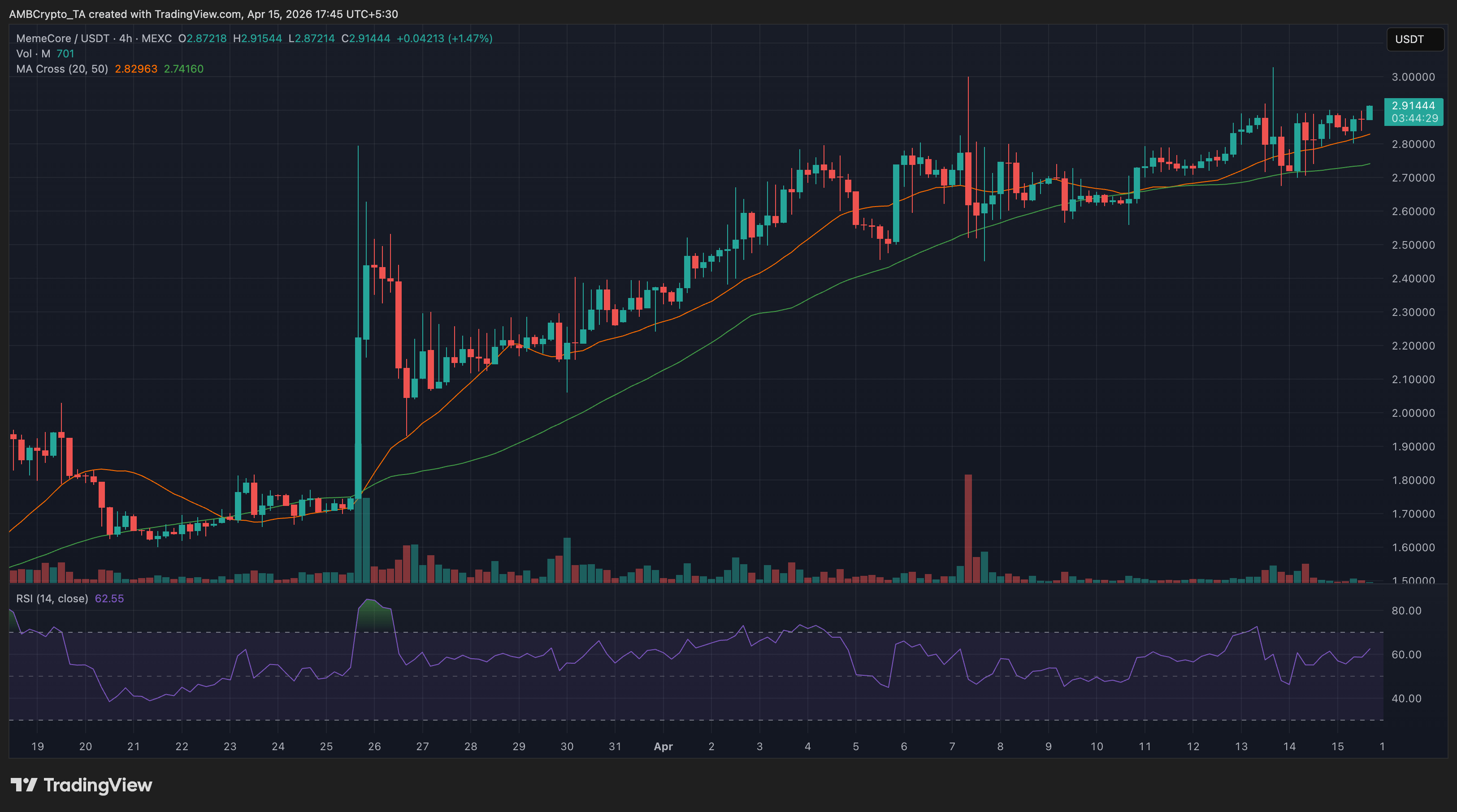
M hovered near $2.91 after a steady climb, with the 20/50 MA structure staying firmly bullish.
RSI held above 60 while volume remained stable, indicating sustained momentum without excessive overheating.
What you should know:
MemeCore continued to trade near its recent highs around $2.90, consolidating just below the $3.00 mark after a measured uptrend. The 20 MA stayed above the 50 MA, both sloping upward, confirming ongoing bullish structure, while RSI near 62 signaled strength without entering overbought territory. Volume remained moderate compared to the earlier breakout phase, suggesting steady participation rather than aggressive accumulation. The move coincided with elevated derivatives activity, where funding rates approached 70%, pointing to crowded long positioning that may amplify price swings. Immediate support sits near $2.80, while resistance remains around $3.00.
Aave (AAVE)
Key points:
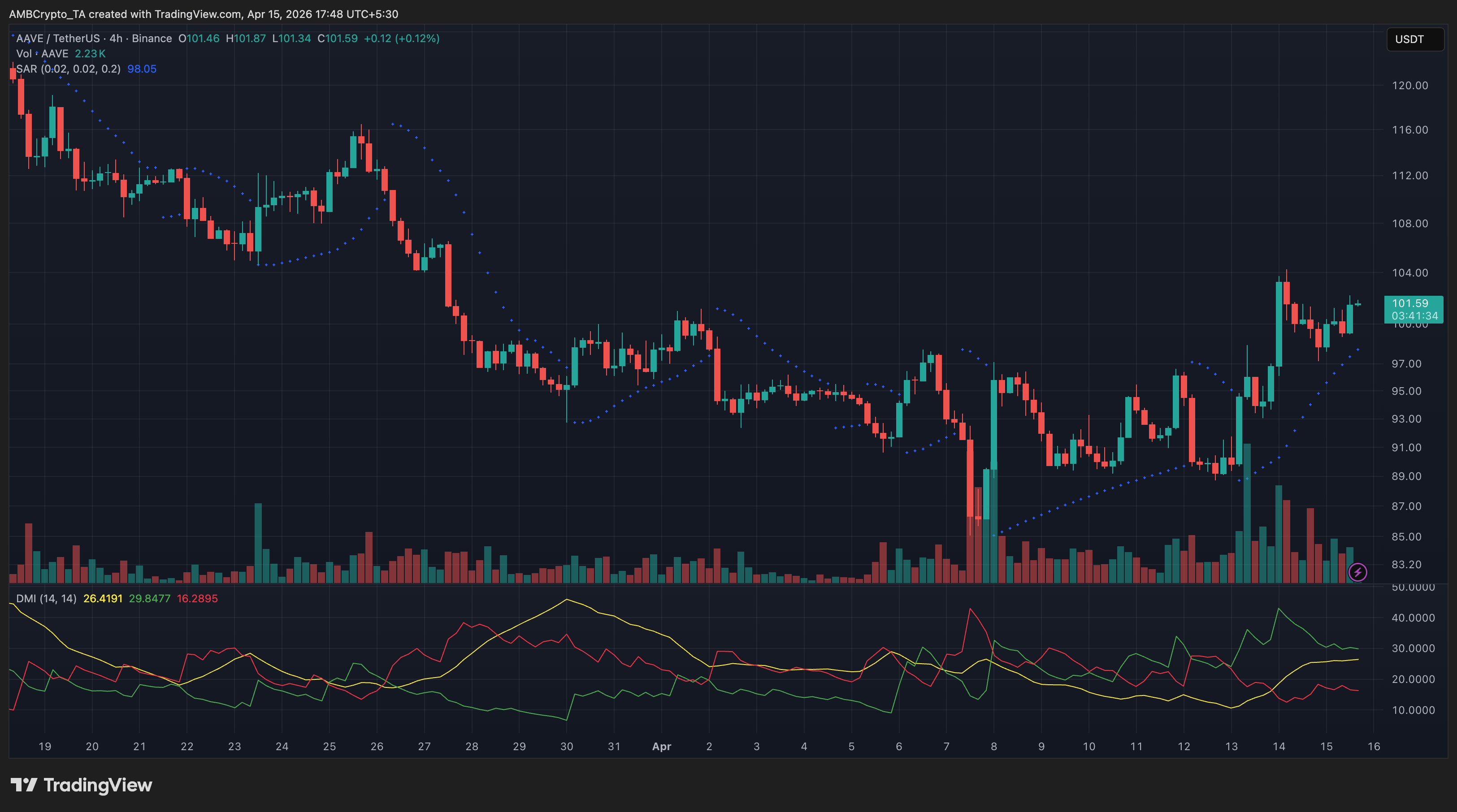
AAVE held above $100 after a recent recovery, with Parabolic SAR flipping below price to signal a trend shift.
DMI reflected a mild bullish bias, while fading volume pointed to slowing momentum near resistance.
What you should know:
After climbing from the mid-$90s, AAVE settled near the $100–$102 range, with recent candles showing reduced follow-through. The Parabolic SAR moved beneath price, indicating a shift in direction, but the lack of strong separation suggested the trend was still developing. DMI showed +DI ahead of -DI, supported by a moderate ADX reading, pointing to a recovery that had yet to fully strengthen. Volume declined after the initial push, aligning with the current pause in momentum. The move followed the April 13 approval of Aave’s revenue-focused governance proposal and Fireblocks introducing institutional access to its lending markets. Support is at $100, while $103 acts as near-term resistance.
RaveDAO (RAVE)
Key points:
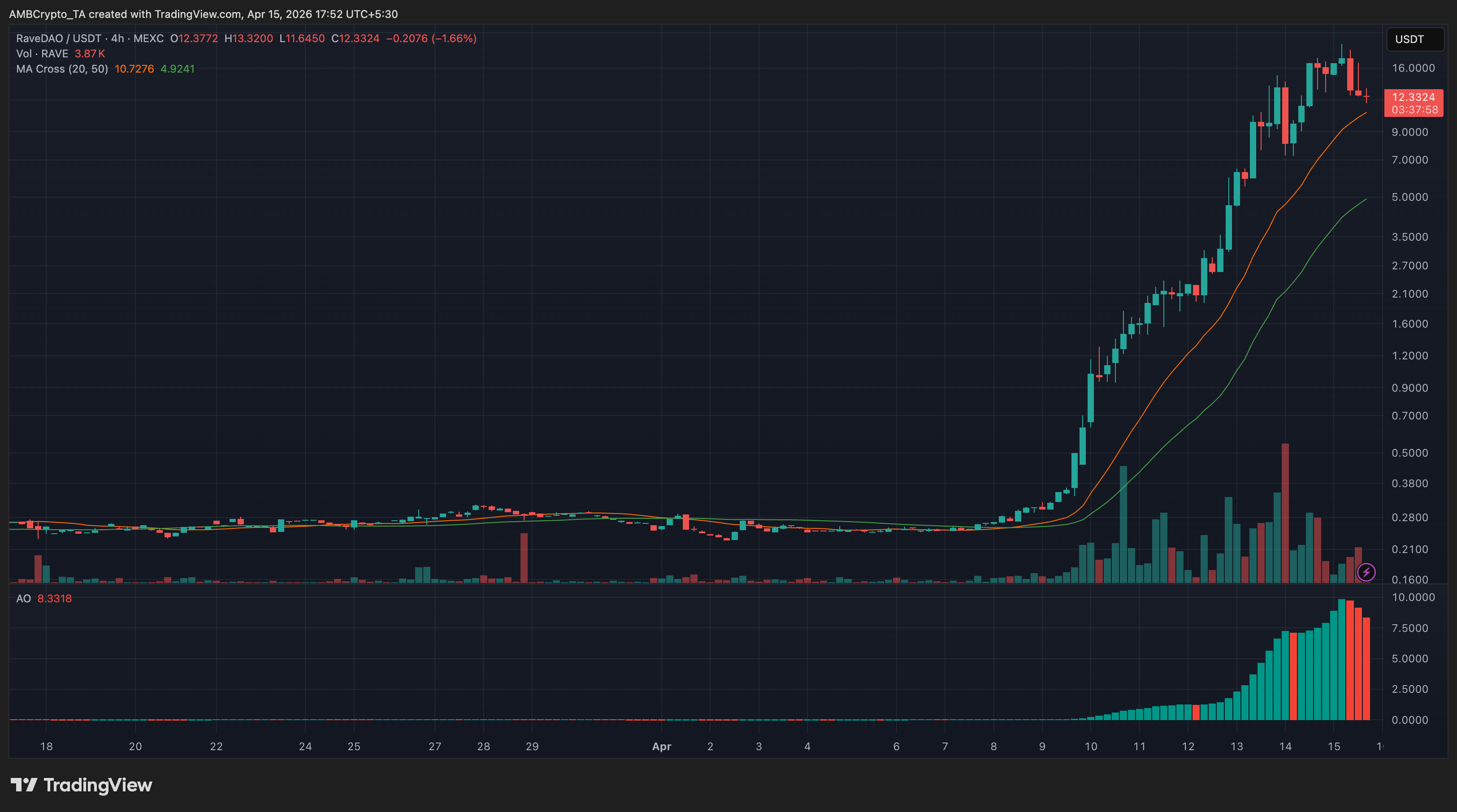
RAVE dropped toward $12.33 after peaking near $16, with price pulling back toward the 20 MA despite a still-bullish MA structure.
Awesome Oscillator began printing red bars at elevated levels, while heavy sell-side volume confirmed active profit-taking.
What you should know:
Following a near-vertical surge from sub-$1 levels, RAVE reversed sharply after failing to sustain momentum above $16, with recent candles forming lower highs. The 20 MA remained above the 50 MA, but the narrowing gap reflected weakening trend strength. The Awesome Oscillator rolled over from strong positive levels into red bars, signaling fading upside momentum, while elevated volume during the decline pointed to distribution rather than passive cooling. The pullback aligned with the unwind of a large short squeeze that previously liquidated up to $43M in positions, alongside concerns over concentrated token supply held by a few wallets. Immediate support sits near $12, while resistance is seen around $15.
How was today's newsletter? |