- Unhashed Newsletter
- Posts
- Bitcoin “zero” searches explode again
Bitcoin “zero” searches explode again

Reading time: 5 minutes
Bitcoin “going to zero” searches hit record as macro bets build

Key points:
Google searches for “Bitcoin going to zero” surged to a score of 100 in February 2026, the highest level in over 3.5 years, as BTC traded nearly 50% below its October 6, 2025 high near $126,080.
While the Crypto Fear & Greed Index sits between 9 and 11 in extreme fear territory, prominent macro investors and institutions are increasing exposure.
News - Retail anxiety has reached its most intense level in years. Google Trends shows global searches for “Bitcoin going to zero” peaking at 100 this month, surpassing the June 2022 crash levels and aligning with panic last seen around the FTX fallout.
The spike comes as Bitcoin trades between $65,948 and $66,500, roughly 47% to 50% below its October 2025 record near $126,080. The Crypto Fear & Greed Index recently dropped as low as 5 before stabilizing between 9 and 11, underscoring widespread caution.
Macro uncertainty adds to the backdrop. The World Uncertainty Index now sits at record highs, reflecting elevated geopolitical and economic stress. Analysts also point to macro-driven fears being amplified by a single prominent bearish voice, with repeated media coverage reinforcing the “Bitcoin could go to zero” narrative in recent weeks.
Macro veterans step in - Today, Bitcoin investor Lark Davis highlighted a contrasting move from Hugh Hendry, the hedge fund manager who returned 31.2% during the 2008 financial crisis. Hendry is running a barbell strategy long Bitcoin while positioning for potential rate cuts.
In May 2025, he sold property and allocated $10 million into BTC. His thesis centers on relative scale. Bitcoin’s roughly $2 trillion market cap stands far below gold’s valuation of over $20 trillion, a gap he believes could narrow over time.
Corporate conviction surfaced today as well. Michael Saylor wrote on X that he has “never been more bullish,” shortly after U.S. jobless claims came in at 206,000, beating the 223,000 forecast and the previous 227,000 reading.
A day earlier on CNBC, Eric Trump called Bitcoin “one of the greatest performing asset classes” and reiterated a $1 million long-term outlook.
Fear, timing, and divergence - According to crypto intelligence platform Perception, professional media sentiment bottomed on February 5 and has been recovering for two weeks. Retail search behavior tends to peak 10 to 14 days later, suggesting public panic may lag institutional positioning.
Whether extreme fear marks opportunity remains debated. Data shared by Nic Puckrin shows average 90-day returns after extreme fear readings have historically been just 2.4%, compared with up to 95% during extreme greed. Critics argue that over 12 months, Bitcoin has averaged gains above 300% following extreme fear periods.
For now, the gap between who is searching “zero” and who is buying has rarely been wider this cycle.
UAE turns mining into $344M profit machine while South Korea recovers stolen BTC
Key points:
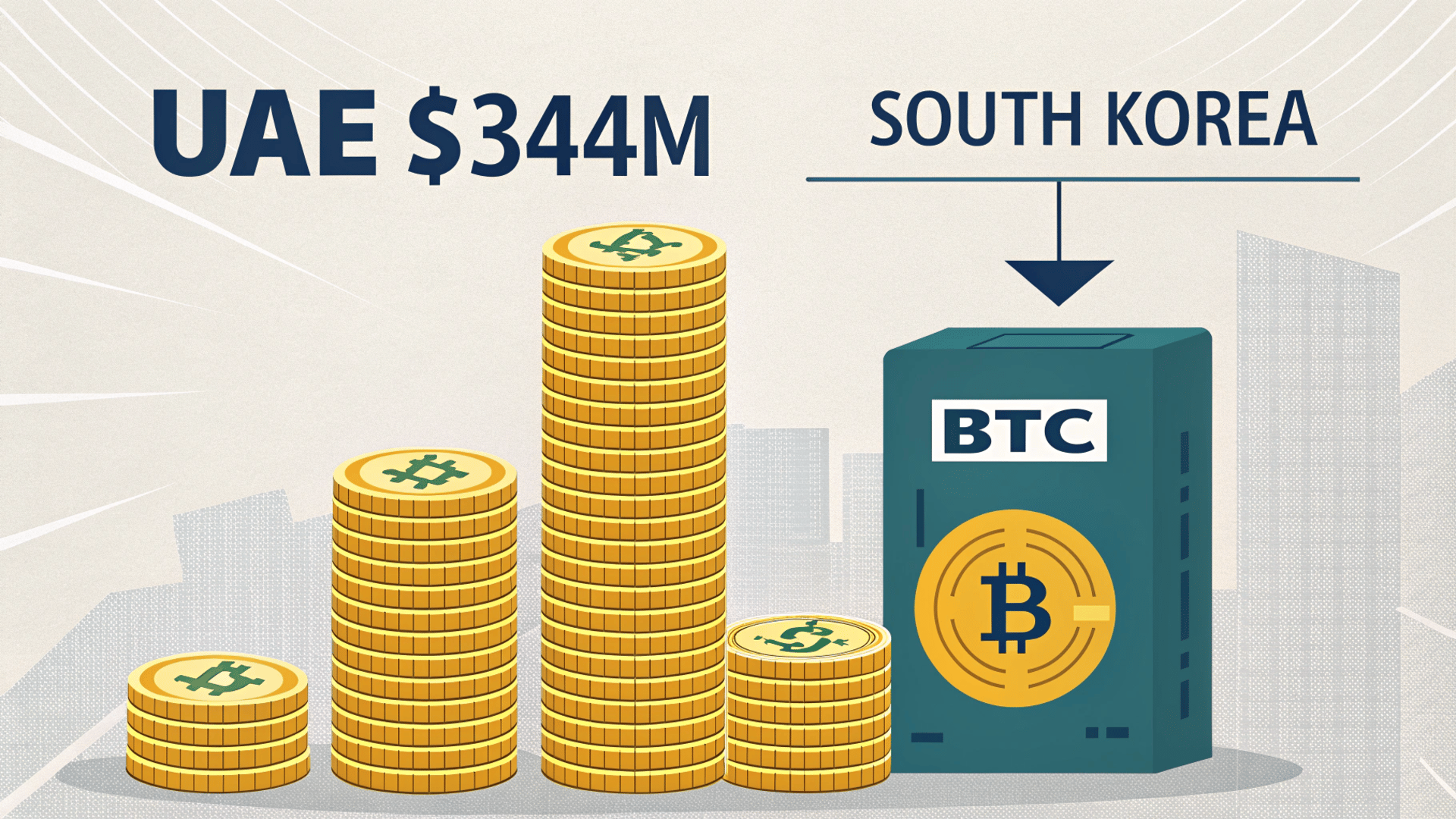
UAE royal-linked mining wallets hold 6,782 BTC worth about $453.6 million, sitting on an estimated $344 million unrealized profit while retaining most of their mined coins.
South Korean authorities recovered 320.88 BTC worth roughly $21.3 million after a phishing-related custody breach, highlighting sovereign crypto security risks.
News - This week, two government-linked Bitcoin narratives moved in opposite directions.
Arkham data shows wallets tied to the UAE Royal Group hold 6,782 BTC valued at approximately $453.6 million. Excluding energy costs, the position reflects an estimated $344 million unrealized profit. The mining infrastructure has continued producing around 4.2 BTC per day over the past seven days, and onchain records show the last recorded outflow occurred roughly four months ago.
At the same time, South Korean prosecutors recovered 320.88 BTC worth about $21.3 million after the cryptocurrency was unexpectedly returned by a hacker. The Bitcoin had disappeared from custody in August 2025 following a phishing attack that exposed wallet credentials. Authorities said they blocked centralized exchange transactions linked to the stolen funds, making liquidation difficult before the assets were transferred back to an official wallet.
UAE’s long-term mining strategy - The UAE’s accumulation stems from sustained industrial mining rather than seizures. The push began in 2022 through Citadel Mining on Al Reem Island. In 2023, Marathon Digital Holdings and Abu Dhabi-based Zero Two launched a joint venture to develop 250 megawatts of immersion-cooled mining capacity, one of the region’s largest disclosed deployments.
Arkham’s latest estimate revises down an earlier August 2025 projection of roughly $700 million in mined bitcoin due to lower market prices, not significant selling. The current holdings represent approximately 0.03% of Bitcoin’s total supply.
Abu Dhabi entities have also expanded exposure through public markets, disclosing more than 20 million shares of BlackRock’s iShares Bitcoin Trust at the end of last year, with a combined value exceeding $1.1 billion.
Korea’s custody scrutiny intensifies - The recovery in South Korea does not end the investigation. Prosecutors confirmed the hacker’s identity remains unknown. The returned BTC has been moved to a secure domestic exchange wallet, and authorities said efforts to identify the suspect will continue.
The incident followed another custody lapse involving 22 BTC that were transferred externally from a cold wallet held by Seoul police. That breach has triggered additional probes into how seized digital assets are stored and monitored.
At time of writing, Bitcoin was trading just below $66,000.
BitMine buys 35,000 ETH as stock slides and Ethereum charts 2026 overhaul

Key points:
BitMine added 35,000 ETH in one day, lifting total holdings to about 4.37 million ETH worth roughly $8.69 billion, with combined cash and crypto reserves near $9.6 billion, even as BMNR broke support near $19.
Institutional holders increased exposure in Q4 2025, while Ethereum outlined 2026 priorities spanning scaling, user experience, interoperability, and post-quantum security.
News - BitMine Immersion Technologies expanded its Ethereum treasury again, purchasing 35,000 ETH in two batches in a single day. The move pushed total holdings to approximately 4.371 million ETH, reinforcing its position as the largest corporate Ether holder. Yet the stock moved lower.
BMNR fell nearly 2% over the past 24 hours and is down more than 8% since February 13. The stock slipped below the lower boundary of a bear flag pattern and lost support near $19. If weakness persists, the next major support sits near $15, with additional levels around $12 and $9. At time of reporting, BMNR was trading near $19.90 in premarket action.
Institutions add despite 48% slide - Top institutional holders increased exposure during Q4 2025 despite the sell-off. Morgan Stanley raised its stake by about 26% to more than 12.1 million shares worth roughly $331 million. ARK Investment Management increased its position by about 27% to over 9.4 million shares valued near $256 million.
BlackRock, Goldman Sachs, Vanguard, and Bank of America also expanded their holdings. All 11 of the largest shareholders added exposure even as BMNR dropped 48% in Q4 and about 60% over the past six months.
BitMine’s market net asset value remained above 1, supporting continued capital flexibility. The company also purchased 45,759 ETH for about $260 million at an average cost basis of $1,992 per ETH.
Ethereum’s 2026 security and scaling push - Ethereum is down 33% year-to-date, trading at $1,979 at press time. The Ethereum Foundation’s 2026 priorities include scaling the Layer 1 gas limit toward and beyond 100 million, advancing the Glamsterdam upgrade in the first half of 2026, strengthening post-quantum security, expanding native account abstraction, and improving cross-L2 interoperability.
OpenAI and Paradigm also released EVMbench, a framework evaluating AI agents’ ability to detect, patch, and exploit Ethereum smart contract vulnerabilities across 120 high-severity issues from 40 audits. OpenAI expanded the beta of its Aardvark security agent and committed $10 million in API credits to defensive crypto research.
BitMine’s correlation with Ethereum has risen from 0.50 to 0.52, while ETH’s long-short ratio has dropped to extremely low levels. As a result, BMNR increasingly behaves as a high-beta proxy for Ethereum.
Kalshi wins Fed praise; Polymarket tests state power

Key points:
Federal Reserve researchers say Kalshi’s macro markets rival traditional forecasts, while the CFTC asserts exclusive jurisdiction over event contracts.
Polymarket’s lawsuit against Massachusetts could determine whether prediction platforms fall under federal commodities law or state gambling rules.
News - Prediction markets are facing a defining moment in the United States. As federal economists increasingly validate their forecasting power, state regulators are moving to restrict their reach.
In February 2026, Polymarket filed a federal lawsuit in Massachusetts arguing that Congress granted the Commodity Futures Trading Commission (CFTC) exclusive authority over event contracts under the Commodity Exchange Act. The filing followed a preliminary injunction against Kalshi, where a Massachusetts court treated certain sports-related contracts as unlicensed gambling. Nevada has also pursued enforcement actions targeting similar offerings.
At the same time, a Federal Reserve working paper released on February 12 found that Kalshi’s macro contracts closely track, and in some cases exceed, traditional benchmarks such as the New York Fed’s Survey of Professional Forecasters. Researchers said Kalshi’s “rich intraday dynamics” provide continuously updated probability distributions around rate decisions, inflation, payroll data, and other macro indicators.
Federal authority or state control? - CFTC Chair Michael Selig filed an amicus brief in the Ninth Circuit asserting federal oversight of prediction markets. Former CFTC Chairman Chris Giancarlo also warned that expanding state intervention could fragment derivatives regulation.
However, political pushback has intensified. Utah Governor Spencer Cox labeled the markets gambling, while Senator Elizabeth Warren criticized efforts to limit state authority. A recent Ninth Circuit decision denied a pause on Nevada’s enforcement action, allowing the case to proceed while broader jurisdictional questions remain unresolved.
Markets enter mainstream finance - Institutional interest is rising despite the legal friction. Bitwise filed with the SEC to launch election-linked ETFs under its “PredictionShares” platform, while Roundhill and GraniteShares submitted similar filings.
Prediction markets surpassed $10 billion in monthly trading volume last year, and Dune data showed $3.7 billion in weekly volume in January 2026. Whether courts side with federal preemption or state enforcement could determine whether these platforms evolve into nationally standardized financial infrastructure or remain subject to a patchwork of local rules.
More stories from the crypto ecosystem
Interesting facts
Wall Street’s core plumbing is now piloting tokenization: The SEC issued a no-action letter allowing the Depository Trust Company (DTC) to run a time-limited tokenization pilot for DTC-custodied assets, with DTCC saying the service is expected to begin rolling out in H2 2026 under defined guardrails.
Hong Kong’s retail crypto ETF market is still small compared to the U.S.: While Hong Kong approved spot Bitcoin and Ether ETFs for retail investors in 2024, their combined assets remain a fraction of U.S. spot ETF holdings, highlighting how regulatory approval alone does not guarantee immediate institutional-scale inflows.
Bitcoin mining difficulty hit a record high in 2024 post-halving: Following the 2024 Bitcoin halving, network mining difficulty reached all-time highs, signaling intensified competition among miners even as block rewards were cut in half, reinforcing how the network self-adjusts to maintain issuance schedules.
Tired of news that feels like noise?
Every day, 4.5 million readers turn to 1440 for their factual news fix. We sift through 100+ sources to bring you a complete summary of politics, global events, business, and culture — all in a brief 5-minute email. No spin. No slant. Just clarity.
Top 3 coins of the day
Injective (INJ)

Key points:
INJ advanced to $3.23 after reclaiming the $3.00 level, rebounding from its recent base near $2.70–$2.80.
The Squeeze Momentum bars remained negative but continued contracting, while volume expanded sharply, confirming renewed participation.
What you should know:
Injective pushed higher after spending weeks under pressure, with price breaking above the $2.95 consolidation zone and extending toward $3.40 before settling near $3.23. The move unfolded alongside a reported 602% jump in 24-hour trading volume, signaling strong buyer engagement rather than a thin bounce.
Although price climbed above the fastest moving average in the MA Ribbon, the broader ribbon structure still slopes downward, indicating the larger downtrend has not fully reversed. Meanwhile, the Squeeze Momentum histogram showed shrinking red bars, reflecting fading bearish force but not yet a full bullish expansion.
Community-driven optimism and discussion around buybacks also coincided with the rebound. Holding above $3.00 keeps short-term structure constructive, while $3.40–$3.50 remains the next resistance zone to monitor.
TRON (TRX)

Key points:
TRX traded near $0.2798 after rebounding from the recent low around $0.2680–$0.2700, but it remained below the prior lower high near $0.2850.
DMI showed limited trend strength with ADX near 15, while -DI slightly led +DI, and volume held steady without a breakout spike.
What you should know:
TRON stabilized after its pullback from the February peak near $0.3200, carving out a base above $0.2700. The recent bounce carried price back toward the $0.2800 zone, though it did not reclaim the last lower high around $0.2850, keeping the broader structure range-bound rather than decisively bullish.
Trend strength remained muted, with ADX hovering near 15 and directional lines tightly clustered, signaling consolidation instead of strong momentum. Volume remained consistent, suggesting measured participation rather than aggressive accumulation.
On the fundamental side, TRX saw fresh utility catalysts this week. Polymarket enabled native TRX deposits, TRON DAO integrated TRC-20 USDT payments into a gaming platform, and Tron Inc. expanded treasury holdings to over 681.7M TRX. Holding above $0.2700 keeps the recovery intact, while $0.2850–$0.2900 stands as the immediate resistance band to watch.
Pippin (PIPPIN)

Key points:
PIPPIN slipped to $0.49 after rejecting the $0.70–$0.75 peak, consolidating just above the $0.47 support zone.
Despite the pullback, price remained above the MA ribbon, while RSI eased to 55.58, signaling cooling momentum rather than oversold conditions.
What you should know:
After a steep rally into the mid-$0.70s, PIPPIN reversed sharply and retraced toward the $0.49 area. The latest candles showed stabilization rather than continued capitulation, with no major spike in selling volume. Trading activity has thinned compared to the surge that fueled the earlier breakout, reinforcing the idea that the decline reflected fading participation rather than aggressive distribution.
Technically, price still trades above its 20, 50, 100, and 200 SMAs, keeping the broader structure constructive for now. However, the inability to sustain levels above $0.55 shifted short-term control back to sellers. RSI drifting near the midline confirmed that momentum has reset.
Holding $0.47–$0.49 keeps the structure intact, while a decisive move below that band exposes deeper retracement risk. Reclaiming $0.55 would be the first signal of renewed upside intent.
How was today's newsletter? |